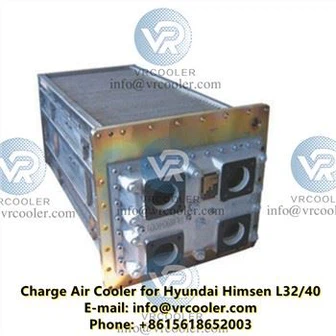
Biogāzes ģeneratoru komplekta radiatori (parasti sausie dzesētāji/augstas- un zemas-temperatūras gaisa-dzesēšana)
BiogāzeĢeneratora komplekta radiatori(Parasti sausie{0}}gaisa dzesētāji/atsevišķa augstas{1}} un zemas-temperatūras dzesēšana)
Biogāze ir ļoti mitra, kodīga un satur daudz piemaisījumu. Tādēļ radiatoru konstrukcijās prioritāte ir izturība pret koroziju, aizsērējumu novēršana un atsevišķa augstas{1}} un zemas{2}}temperatūras dzesēšana. Inženierpraksē gandrīz tikai tiek izmantoti sausā- tipa gaisa dzesētāji, un ūdens dzesēšanas torņi netiek izmantoti.
Lai nodrošinātu efektivitāti un ilgmūžību, biogāzes dzinēji parasti izmanto divas neatkarīgas dzesēšanas sistēmas:
Augstas{0}}temperatūras ķēde (HT)
Dzesēšana: Cilindra čaulas ūdens, dzinēja bloks
Temperatūra: 85-95 grādi
Funkcija: Novērš dzinēja pārkaršanu un uztur stabilu siltuma efektivitāti
Zemas-temperatūras ķēde (LT)
Dzesēšana: starpdzesēts gaiss, motoreļļa, biogāzes priekšsildītājs
Temperatūra: 55-70 grādi
Funkcija: pazemina ieplūdes gaisa temperatūru, aizsargā motoreļļu un stabilizē gaisa -degvielas attiecību
Katra ķēde ir aprīkota ar īpašu siltummaini, ko kopā dēvē par augstas{0}} un zemas{1}}temperatūras sausajiem dzesētājiem.
Atšķirības no radiatoriem parastajos dīzeļdzinējos/dabasgāzes dzinējos
Uzlabota izturība pret koroziju
Biogāze satur H₂S un ūdens tvaikus, kas ir ļoti kodīgi; spurām un cauruļvadiem jābūt-izturīgiem pret koroziju.
Vieglāk tīrīt
Biogāze satur daudz piemaisījumu, un dzesēšanas spuras ir pakļautas aizsērēšanai; konstrukcijai jāatvieglo ūdens mazgāšana un gaisa pūšana.
Stingrāka temperatūras kontrole
Biogāzes siltumspēja būtiski svārstās; nestabila temperatūra zemas{0}}temperatūras ķēdē tieši ietekmē jaudu un izplūdes temperatūru.
Aizsardzība pret sasalšanu ziemā
Etilēnglikola antifrīzu parasti izmanto, lai novērstu cauruļu plīsumus sasalšanas dēļ.